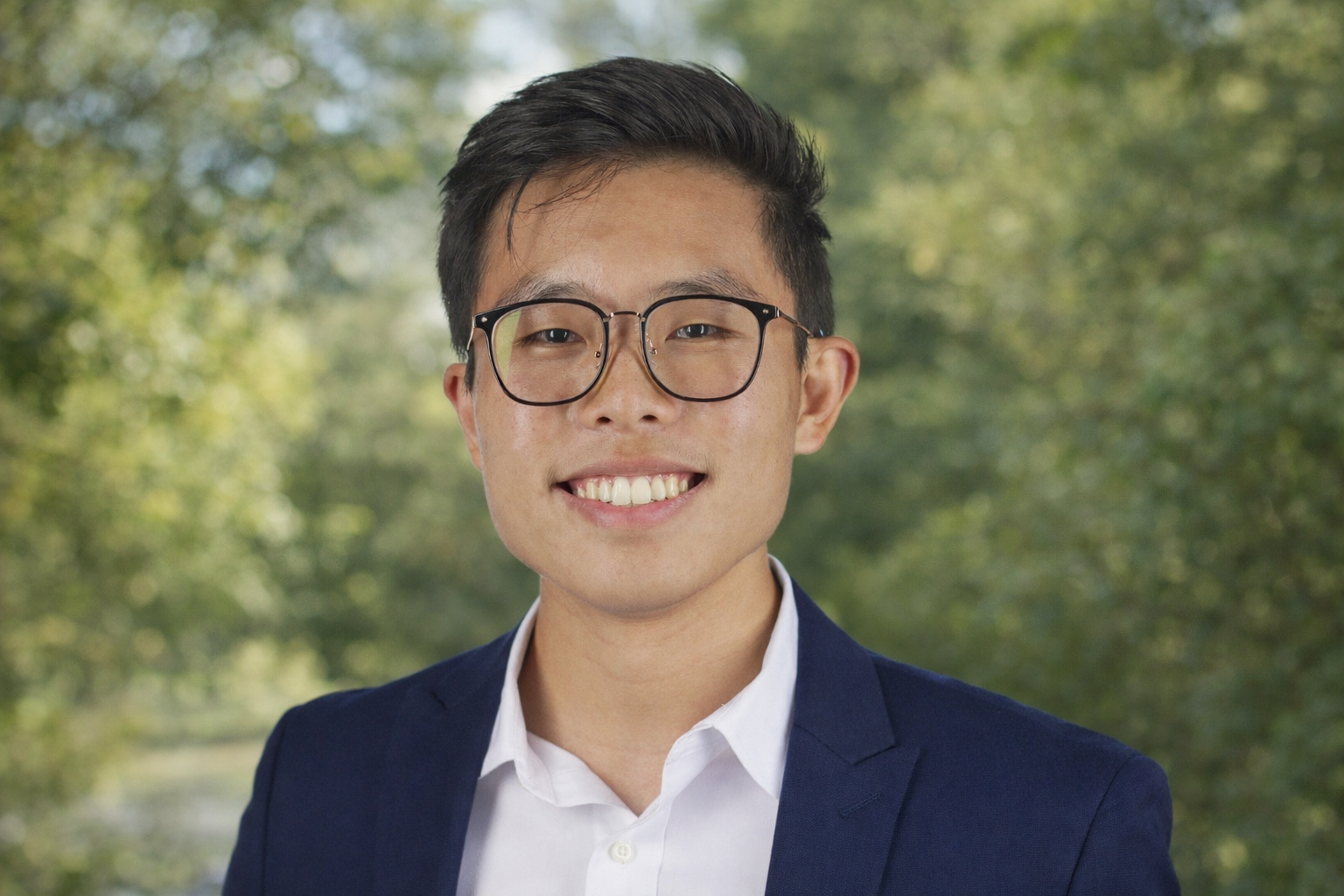
Max Chen Huang
Hi, I'm Max. I use physics and computation to design materials for clean energy. I work across first-principles simulation, statistical mechanics, and machine learning, building models that explore how materials behave at scales that conventional quantum-mechanical calculations cannot reach.
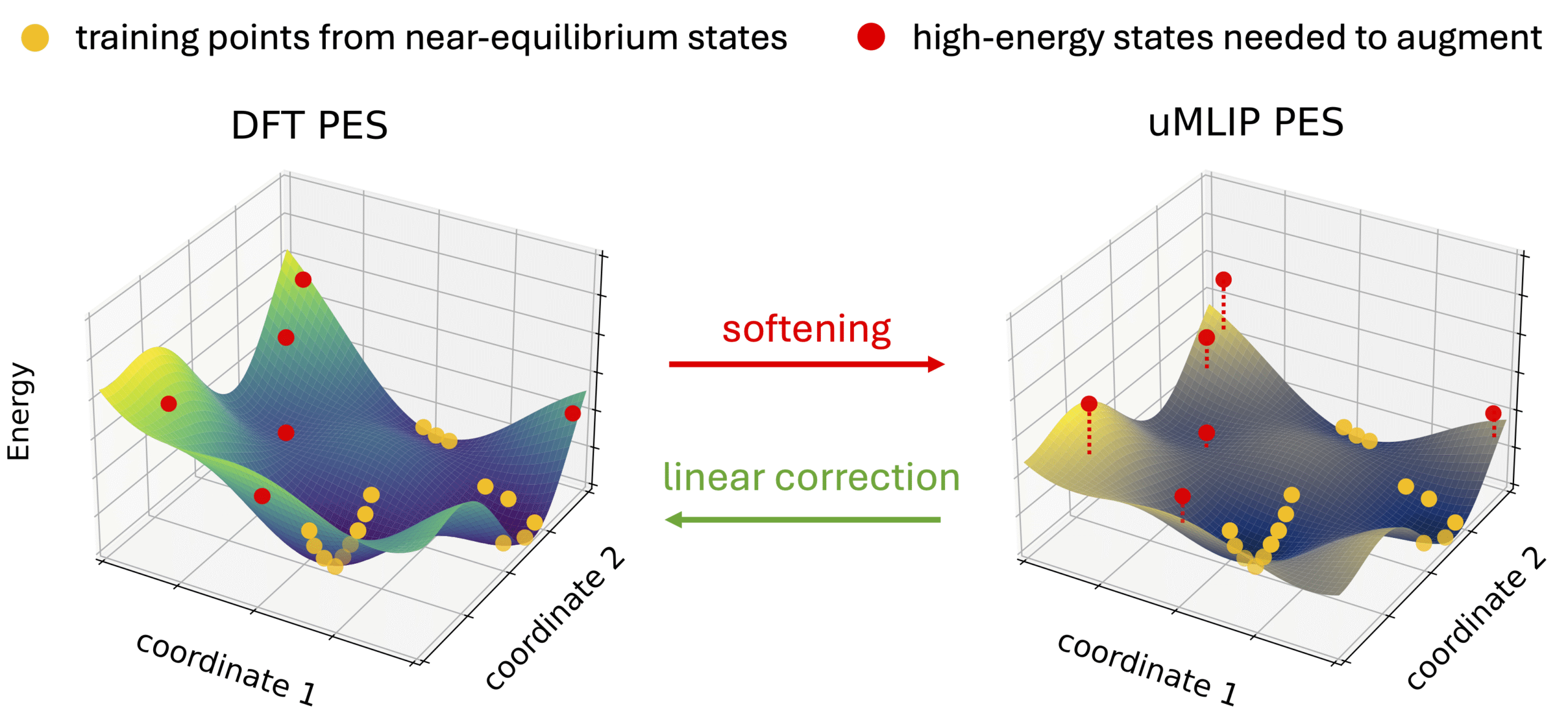
I grew up in Montreal before moving to Philadelphia to study at Penn. I'm now a fourth-year student in the Vagelos Integrated Program in Energy Research (VIPER). In the Vojvodic Lab, I study energy materials at the atomic scale, particularly how catalysts for green hydrogen restructure and degrade under operating conditions. Lately, much of my work has focused on machine-learned interatomic potentials (MLIPs). Specifically, I teach models enough physics to explore millions of atomic configurations without having to calculate each one from first principles.
I'm especially excited by what happens when advances in computation meet problems in the physical world. AI is giving us new ways to search, model, and reason, and I'm drawn to applying those capabilities to physical systems. The energy transition will depend on better catalysts, batteries, photovoltaics, semiconductors, and, I hope, fusion technologies. Building them requires understanding materials well enough, not only to predict how the ones we have will behave, but to discover what we should make next (if curious, here's a recent paper on the inverse design of functional materials).
I want to spend my career at that interface between computation and the physical sciences, where advances in one can open new possibilities in the other. I hope to help develop computational methods that allow us to better understand and discover the materials a low-carbon future will require. I also care deeply about building the communities that sustain this work, sharing ideas generously, learning from people who see problems differently, and thinking seriously about what the things we create are ultimately for.
- Wrapping up my master's thesis on grand-canonical Monte Carlo sampling of IrO₂ surfaces. More in Research →
- Growing Penn's ΣΠΣ Society of Physics Students chapter, and getting SEED off the ground — a new club we founded to connect engineers across disciplines around real-world projects. More in Community →
- Trying my best to keep up with my annual reading goal. More in Fun →
- Thinking about critical minerals, the supply chains behind them, how fragile those chains are, and the geopolitics of who controls the materials the energy transition depends on. More in Thoughts →
- Training season: back with Penn men's ultimate for the fall, building my base for an Ironman 70.3 I'm eyeing in summer 2027. See Fun →